How to stay comfy all summer with the right home-cooling options
March 20, 2026
As summer heats up, B.C. residents who have been putting off investing in whole-home cooling start to consider their options.
To keep the temperature comfortable on hotter days, there are a number of choices, which include a central air conditioning unit, or a heat pump.
What’s the difference between an air conditioning unit and a heat pump?
In a nutshell, a heat pump can be used to heat and cool your home, while an air conditioning unit just cools your home. But they both cool your home in a similar way—by extracting heat from your home and transferring it outside.
Are there clear advantages of one cooling method over the other?
Many things can affect how much these upgrades cost. If you have a gas furnace, you can make your home cooler in the summer by adding an electric central air conditioner. This type of unit can use the ductwork you already have to move cold air through your home.
Another choice is to install an electric heat pump. A heat pump can heat and cool your home all year. Whether it fits your budget depends on a few things, like whether your home’s breaker panel and wiring have the necessary capacity or if you already have the right ductwork.
For homes in B.C.’s Lower Mainland that don’t have a cooling system, a heat pump is an easy way to stay comfortable during hot weather.
A heat pump can also be part of a “dual fuel system,” which uses both electricity and gas. This can help keep your home comfortable on very hot and very cold days.
A dual fuel system consists of an electric heat pump and a high-efficiency gas furnace, which work together through a connected thermostat (for which we offer rebates to our electricity customers) that allows them to talk to each other.
Every home is different, so it’s a good idea to get at least three quotes from different contractors. This will help you compare the cost of a heat‑pump‑only system with a dual fuel system. You can find contractors in your area through the Home Performance Contractor Network.
How much does it cost to buy and install an air conditioning unit?
In British Columbia, buying and installing a central air conditioner usually costs between $5,000 and $8,000.1 The price can change based on things like the unit’s size, whether your home already has ductwork, how big or energy efficient your home is and whether its breaker panel or wiring needs to be upgraded.2
How much does it cost to buy and install an electric heat pump?
Just like air conditioners, the cost of buying and installing a heat pump can vary. It depends on the type of heat pump you choose and the size and efficiency of your home. In B.C., a ductless heat pump can cost about $6,000 to $16,000.3,4 The price may be higher if you need to upgrade your home’s electricity capacity or make other renovations before it can be installed.
Types of air conditioners
Central systems: Central systems cool your whole home by pushing cold air through ductwork. They are the most expensive type of air conditioner and usually cost between $3,000 and $8,000 to buy and install.
Portable and window units: Portable and window units are made to cool single rooms. They can be a good choice if you only need to cool one area or want extra cooling in a room that your central system doesn’t reach well.
Portable units vent through a window using a flexible hose. They sit on wheels, so you can move them from room to room—like a bedroom at night or a workspace during the day. Most portable units cost between $400 and $800.
Window units sit in a window frame and are usually more efficient than portable ones—sometimes twice as efficient. They save the most energy when they use inverter or variable‑speed technology. They work well for cooling one room, but they don’t fit all window types and may not be allowed in some strata buildings. They usually cost between $300 and $700.
Choosing the right air conditioner
Try to choose models with Energy Star certification. They use less energy and are built to a higher standard. You should also check the Combined Energy Efficiency Ratio (CEER). A higher number means better performance. Window units usually range from nine to 15, while portable units are often between 5.6 and 8.4.
It also helps to know the Seasonal Energy Efficiency Ratio (SEER) rating for central air conditioning units and heat pumps, used to measure the cooling efficiency of the system over a typical cooling season. Look for an air conditioner with a SEER rating between 16 and 20; a good heat pump will typically have a rating of 16 to 18.
Make sure the unit’s cooling power matches the size of your room. A simple way to estimate what you need is to multiply the room’s square footage by 20 BTU.5 For example, a room that is 15 by 12 feet is 180 square feet. Multiply 180 × 20 to get about 3,600 BTU.
A trained heating and cooling professional can help you decide which type of system is right for your home.
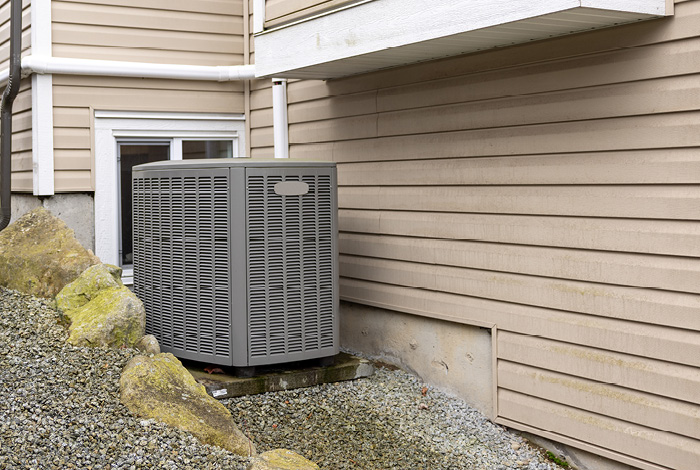
In hot weather, heat pump systems such as this outdoor unit cool a whole home by absorbing warmth from the air inside a home and transferring it outside.
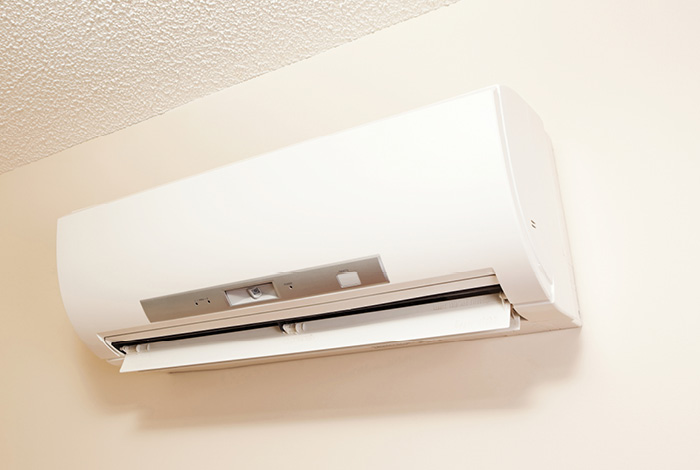
Heat pumps such as this wall-mounted ductless unit can help provide year-round comfort by cooling in the summer and heating in the winter.
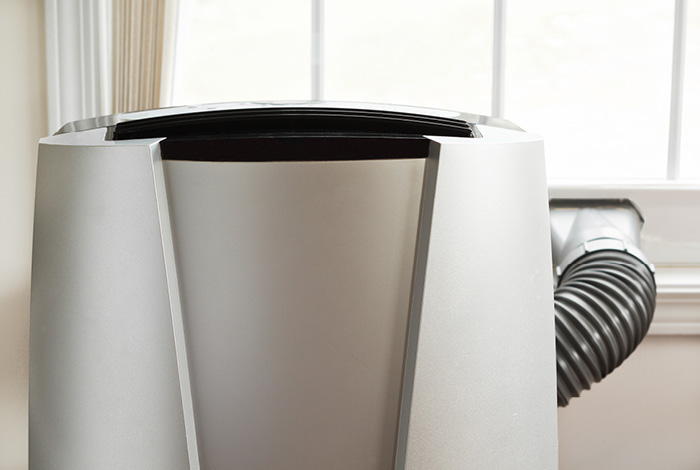
Portable air conditioners are a good option for those wanting to lower the temperature in just one room and to be able to easily move it to where it’s needed most in a home.
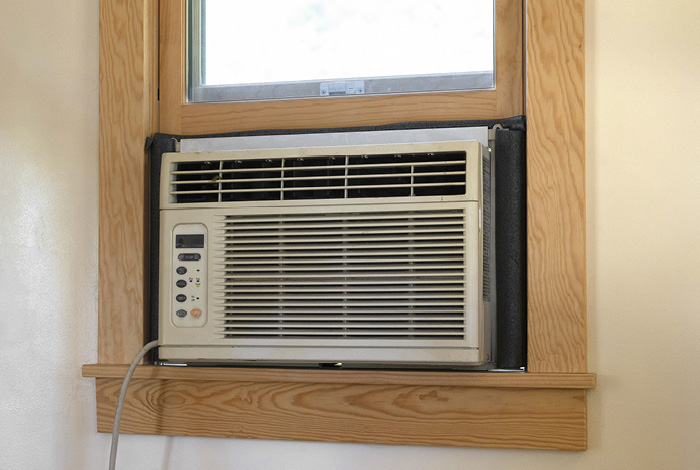
Window air conditioners use less energy than portable ones, but you can’t move them around as easily and some buildings don’t allow them.
Get a central air conditioning unit if…
If you already heat your home with gas, adding a central air conditioner is usually the most affordable way to cool your whole home. It works with your existing furnace system.
Get a heat pump if…
If you want a flexible, energy‑saving option, a heat pump is a good choice. It can cool your home in summer and also heat it in winter.
Keep in mind that heat pumps can cost more to install, maintain and repair because they have more parts and run all year.
Get a portable air conditioning unit if…
A portable or window unit is a good option if you want an affordable way to cool one room, add extra cooling to a warm spot or use something easy to move or install without upgrading your whole home’s system.
CBC Story: Trying to chill: The pros and cons of portable and window air conditioning units | CBC News
General cooling tips
Getting ready ahead of time can help you save energy when the weather gets very hot. On the hottest days of the year, our customers’ electricity use can almost triple compared with electricity use on an average summer day.6 To help manage energy use during these times, people can:
- use awnings, blinds or curtains to block direct sunlight. You can also plant a shade tree on the south side of your home. Check the caulking around your windows and replace it if needed
- use window fans at night to bring cooler air into your home—but remember that fans alone may not be safe if the temperature is 35 °C or higher. Keep heat pumps set between 24 °C and 28 °C, use the “cool” mode and set the fan to low7
- if you have an air conditioner, set your thermostat between 24 and 26 °C when you’re home and awake and 28 °C when you’re out or asleep
- cook outside on a barbecue to help keep your home cooler
There are also things you can do all year to save energy and lower costs:
- add draftproofing around doors and windows to seal gaps and keep hot air out in summer and cold air out in winter8
- turn off your gas fireplace’s pilot light in summer to save energy and reduce unwanted heat
- wash clothes in cold water
- hang clothes outside in summer and inside in winter
- install water‑saving showerheads and faucet aerators. Taking shorter or fewer showers can also lower water‑heating costs and help save water9
Because the Southern Interior often gets very hot, it’s important to have a backup plan to stay cool if the power goes out. Outages can happen anytime due to storms, wildfires or accidents, so it’s important to stay prepared.
Find more ways to stay cool this summer while saving energy:
Stay cool while keeping costs down: FortisBC offering tips to help lower energy use
6 things to do this summer to help you save energy all year long
More energy-saving tips
Check out all our energy-saving tips and how-to videos.
1BC Hydro, Air conditioners.
2Homedepot.ca, Cost to Install an Air Conditioner.
3BC Hydro, Heat pumps.
4Vancouver.ca, Heat Pump Mini-Split Consumer Guide.
5Natural Resources Canada, Air Conditioning Your Home.
6Based on average and peak energy use for FortisBC electricity customers between 2019-2021.
7U.S. Department of Energy, Home Cooling Systems and Energy Star, A Guide to Energy-Efficient Heating and Cooling.
8Government of Canada, Save money on energy.
9Natural Resources Canada, Make small changes that add up.
Related stories