Which fuel works best for you—compressed natural gas (CNG) or liquefied natural gas (LNG)? It depends on a few things, like fuel availability in your area, the type and size of your vehicles and your required driving range.
|
CNG |
LNG |
|
|---|---|---|
|
What it is: |
natural gas that’s been piped to a compression facility |
natural gas that’s been cooled to -162 °C to become a liquid |
|
Best for: |
high-utilization fleets with predictable routes |
long-haul freight requiring maximum range |
|
Vehicle types: |
|
|
|
How it’s delivered: |
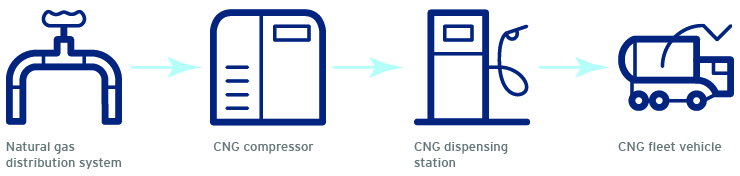
through our natural gas system to various dispensing stations across B.C. |
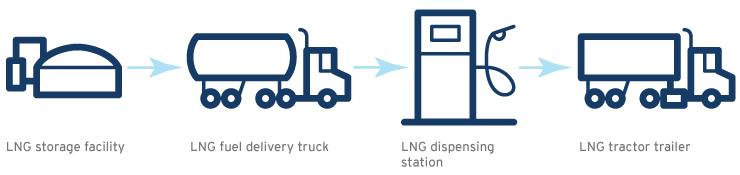
from our LNG storage facilities by tank truck to a:
|
Fuelling process
Both CNG and LNG come from our distribution system, but there are differences in how each fuel type is delivered and dispensed.
CNG fuelling
LNG fuelling