Hydrogen gas
Hydrogen gas holds exciting potential as a lower carbon energy.1 We expect that hydrogen will play a role in expanding FortisBC’s portfolio of lower carbon energy. It’s another way we’re supporting the province’s
CleanBC strategy.
What is hydrogen gas and how is it made?
Hydrogen gas is colourless, odourless and tasteless, just like natural gas. It emits no carbon dioxide when used for energy.
FortisBC is currently exploring three different ways to produce hydrogen:
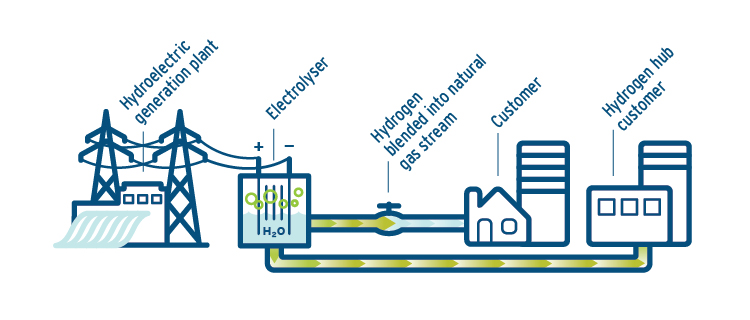
Green hydrogen
Hydrogen and oxygen atoms are separated from water through electrolysis powered by renewable electricity.
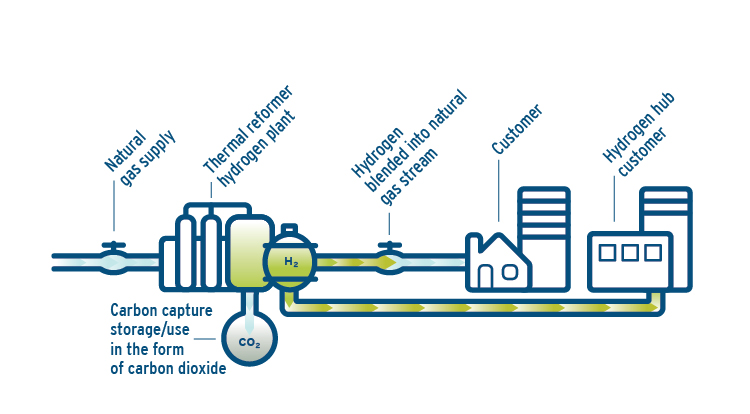
Blue hydrogen
Blue hydrogen has carbon captured as carbon dioxide and stored as gas.
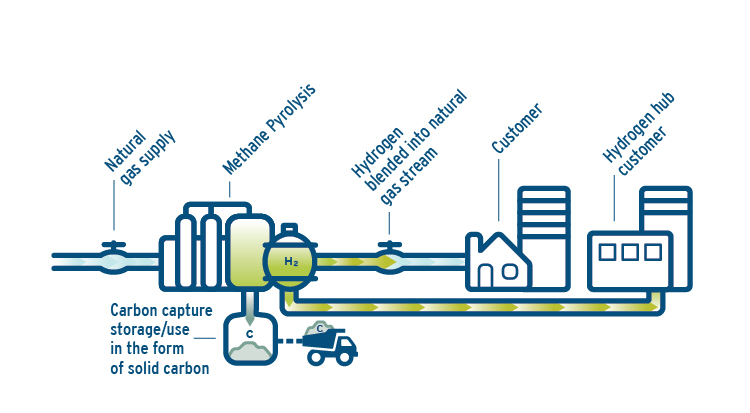
Turquoise hydrogen
Turquoise hydrogen has carbon captured as a solid substance that can either be stored or used by other industries.
While we’re currently exploring green, blue and turquoise hydrogen, we are also exploring accessing hydrogen byproduct from industrial processes that gets vented to the atmosphere. Instead, this hydrogen byproduct can be captured and used as an energy source.
Helping lower emissions
We continue to acquire lower carbon gas,2 including Renewable Natural Gas3 (RNG) to support provincial climate action targets. In 2025, we acquired 4.2 petajoules of RNG for our customers,4 which is enough energy for more than 31,000 homes for a year.5
Hydrogen offers exciting new possibilities, including blending hydrogen with natural gas to lower emissions and using hydrogen in certain industrial settings or in fuel cells for transportation. As a gaseous energy, hydrogen offers many of the same advantages
as natural gas (such as simple and affordable storage) but emits no carbon dioxide when used for energy.
Building a hydrogen industry in B.C.
The B.C. government has taken several actions to encourage the growth of a hydrogen industry, including the announcement of the provincial hydrogen strategy, a blueprint
for how lower carbon hydrogen could support provincial climate goals and create new jobs in B.C.
FortisBC plans to be an important part of a hydrogen industry in B.C.—both in potentially helping to develop production capacity and in providing the necessary transportation infrastructure and expertise needed to make hydrogen production and use
economical.
We’re working with industry leaders to share knowledge and set best practices in hydrogen production, distribution and end-use. FortisBC is a member of Hydrogen BC (a branch of The Canadian Hydrogen and Fuel Cell Association)
and an active supporter of and participant in HyDeal LA–one of the most ambitious hydrogen projects in the world.
We’re working with the University of British Columbia’s Okanagan campus and multiple other post-secondary institutions and international joint industry programs to study how to safely integrate hydrogen into our natural gas system.
Supporting the energy transition
We believe that hydrogen has the potential to play a role in a lower carbon energy future and can help support the goals of the province’s CleanBC strategy.
A study we commissioned with the BC Bioenergy Network and the Province
of British Columbia shows the province holds a wealth of potential to make lower carbon gases, and hydrogen is the single largest potential source.
Learn more about all the ways we’re working to help our customers lower overall emissions.
1FortisBC uses the term lower carbon energy to refer collectively to electricity and the lower carbon gases or fuels that the utility can produce, use and/or acquire under the Greenhouse Gas Reduction (Clean Energy) Regulation (“Regulation”). The Regulation identifies different sources of electricity and gas that are prescribed based on their feedstock and production processes. FortisBC’s
lower carbon energy portfolio includes Renewable Natural Gas (also called “RNG”) and electricity. Other gases and fuels may be added to the portfolio over time. FortisBC’s lower carbon energy portfolio is lower carbon when compared
to conventional natural gas.
2FortisBC uses the term lower carbon gas to refer collectively to the lower carbon gases or fuels that the utility can produce, use and/or acquire under the Greenhouse Gas Reduction (Clean Energy) Regulation (“Regulation”). The Regulation identifies different sources of gases that are prescribed based on their feedstock and production processes. FortisBC’s lower carbon gas portfolio includes Renewable Natural Gas (also called “RNG”). Other gases and fuels may be added to the portfolio over time. FortisBC’s lower carbon gas portfolio is lower carbon when compared to conventional natural gas.
3Renewable Natural Gas (also called “RNG”) is produced from biogas at dedicated RNG production facilities. Biogas is derived from decomposing organic waste at landfills or agricultural and other organic waste such as wastewater from treatment facilities. The biogas is captured, upgraded and processed to create RNG that is added to existing energy infrastructure. This means we’re unable to direct RNG to a specific customer. However, because RNG displaces conventional natural gas, the more RNG that is added to the gas system, the less conventional natural gas is used.
4FortisBC 2025 Sustainability Report, page 16.
5Based on a typical residential gas customer with an average annual consumption of 79 gigajoules.

