First time? Here’s what to consider before renting an excavator
March 4, 2026
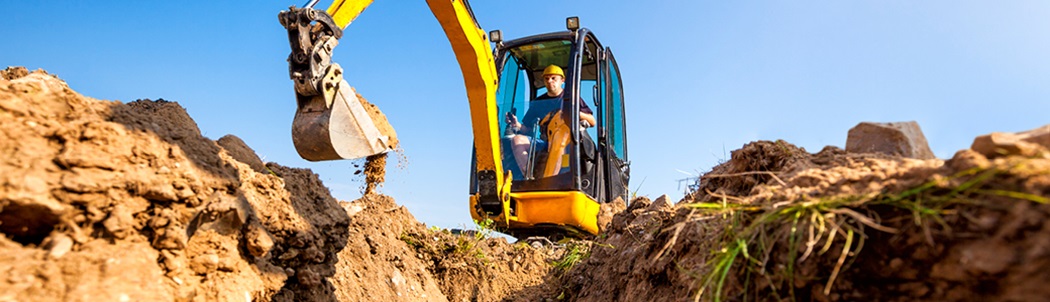
Renting an excavator is handy for all sorts of construction and landscaping projects that require heavy-duty digging, lifting and earth moving. It gives you an opportunity to try out the latest brands and models and you can rent exactly the model you need, when you need it. Here are some things to consider before renting an excavator for the first time.*
*The information provided in this blog is for general guidance only. Readers should consult with professionals for specific advice. FortisBC does not endorse or guarantee the services of any specific rental company or third-party service provider.
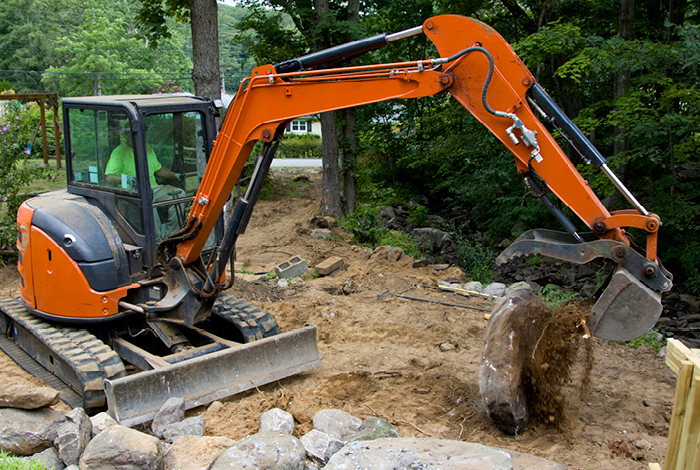
What size and type of excavator do you need?
To help you decide on the best excavator for your construction or landscaping job, keep in mind the specific tasks that the excavator will be used for, the size of space you’ll be working in and the soil conditions.
Will you need a compact excavator, or a larger one for heavy-duty tasks?
Standard/tracked excavators: If your project primarily involves digging deep trenches or moving large amounts of soil or other material in large open spaces, a standard excavator might be the way to go. These are the most common and versatile excavators, featuring a boom, stick, bucket and rotating cab.
Compact/mini excavators: For small-scale residential construction or landscaping projects, or for those where precise digging is required, a mini or compact excavator is typically the best choice. These machines are lightweight, manoeuverable and can access tight spaces. Their compact size and precise controls allow for more accurate digging.
Tracks or wheels?
That all depends on the terrain. Tracked (crawler) excavators are better for soft, uneven land and hills and for use in areas where protecting the terrain isn’t a concern. An excavator with wheels is faster and easier to manoeuver on asphalt and other flat surfaces. They’re often used for landscaping projects and in areas where there is a need to protect sensitive surfaces. Plus, they’re road friendly. They can drive themselves from site to site and are safe to operate on finished pavement without worrying about damaging it.
What attachments will you need for the job?
Rental companies typically offer a wide range of attachments compatible with the brands of equipment they rent. They can provide guidance on the best attachments for your job. Some common excavator attachments include:
- buckets for general-purpose digging and material handling
- hydraulic hammers for breaking concrete, rock and other materials
- grapples for grabbing and moving materials like logs, debris or rocks
- augers for drilling holes in the ground
- thumbs to grab and manipulate materials with greater precision

Excavator budgeting basics
Renting an excavator for the first time may be hard to wrap your head around. Here are some things to consider when budgeting for your first excavator rental:
- How much of your project will require the use of an excavator?
- How long do you think that portion of the project will take?
- How much time do you need to allow for setup, transportation time and potential project delays when planning your schedule?
- Shop around for the best deal. Yes, even for excavators. Rental companies may have options to rent by the day, week, month or even seasonally.
- What are the fuel and transportation costs?
There may be additional features on the excavator to take into consideration which could result in associated fees. Being aware of these kinds of costs can help you choose the right machine for your needs and keep your project on budget.
How do you prepare a project site for an excavator?
Clearing access and providing enough space for safe delivery and the operation of large equipment like an excavator is a good start. But before work can begin, it’s important to find out the location of any underground utilities so you can safely work around them.
Do you know how to find out the location of underground utilities on your project site?
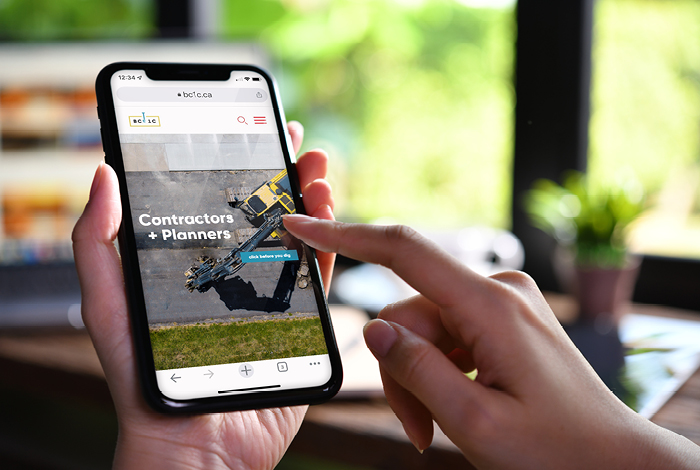
Before you dig, or disturb the ground in any way, you must contact BC 1 Call at least three business days in advance to find out where the underground gas lines and other utilities are located at your job site. Clicking or calling BC 1 Call is easy, and it’s free. If you don’t make the call, you’re risking damaging a utility line, causing service disruptions, incurring costly repair charges and project delays. You’re also risking the safety of your team and the public.
How BC 1 Call works:
- There's no charge for the BC 1 Call service. You just follow the steps on the BC 1 Call site. They’ll notify all member companies that have utilities buried at your job site, including FortisBC.
- Within two to three business days of receiving notification from BC 1 Call, FortisBC will send you a map and information on where gas lines are buried on your job site. If you need help understanding the map or information, follow these easy instructions and interactive guide, or call us at 1-888-822-6555.
- Use the map to mark the location of gas lines on your site with paint or stakes until digging gets underway.*
- If you’re having trouble finding the line, call us. We’ll send someone out to help you find it.
*Make sure your line markings stay visible throughout your work. Weather and other construction can cause markings to fade or get covered, so check them regularly and re-mark when needed. Gas lines indicated on the map are to be used as an estimate. Always exercise caution when digging around underground utilities.
Did you know that you must hand dig to find gas or other utility lines before you dig with an excavator?
Hand digging to expose a gas line is not only the safest way to go—it’s the law. You can’t assume the depth of a gas line. Some lines are buried less than 12 inches from the surface. That’s because many utility lines have been buried for decades and the soil cover depth may have changed due to landscaping or erosion. WorkSafeBC, Technical Safety BC and the BC Energy Regulator require using only hand digging to expose buried utility lines. Machines cannot be used within the “no mechanized dig zone”, which is one metre in any direction of the gas line. You can review the relevant acts and regulations at bclaws.gov.bc.ca.
A guide to hand digging
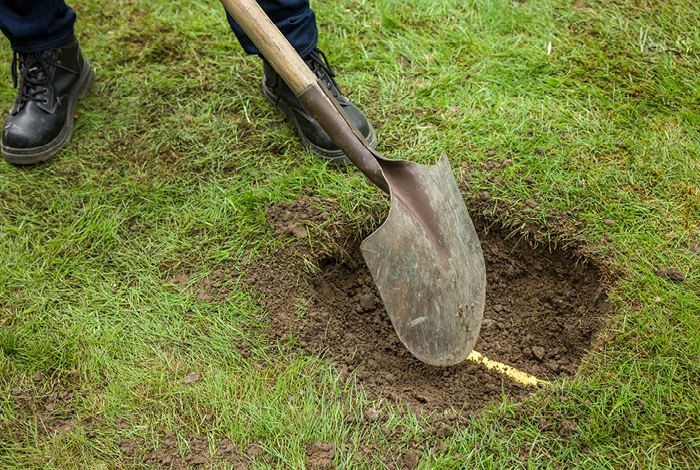
What does hand digging mean? It means finding and exposing the utility line using only rounded, non-powered hand tools. Here’s a quick step-by-step guide:
- After you’ve located and marked the lines according to the map you received, use a rounded shovel to carefully dig down in one-foot increments (30 cm) at a shallow angle.
- If your digging tool is pointy, mechanized or requires a lot of force to use, it’s not a safe tool to use for exposing a gas line.
- Remove small amounts of dirt at a time until the gas line is exposed.
- Once the gas line has been located, brush away the dirt by hand.
Remember, a gas line doesn’t necessarily run in a straight line so it’s important to expose the gas line in multiple locations. You must always hand dig within the “no mechanized dig zone”, which is one metre in any direction of the indicated gas line. Learn more safe digging information for contractors.
Do you need a permit?
If you are working near or crossing a high-pressure (HP) pipeline or FortisBC right of way (ROW), you are required to get a letter of authorization or a permit from FortisBC.
An HP pipeline includes intermediate pressure (IP) and transmission pressure (TP) pipelines. Even if you aren’t digging in the area, you still need a permit to drive a vehicle or machinery over an HP pipeline or ROW.
Overhead hazards to watch out for
Whenever you’re working outdoors, make sure you’re aware of any power lines nearby. Remember that electricity can jump from a power line, so make sure you keep your distance:
- Keep your equipment—like tools, ladders and excavators—at least three metres (10 feet) away from overhead power lines and six metres (20 feet) away from transmission lines at all times. This includes the drop-off location of the excavator to the digging site, and everywhere in between.
- When moving equipment, have someone watch and warn the excavator operator if they’re getting too close to overhead power lines.
Transmission power lines (high voltage) can look very similar to overhead power lines. We recommend you err on the side of caution and stay as far away as possible to ensure your safety. Learn more about working safely around power lines.
Is your team familiar with excavator safety guidelines?
Excavator safety starts with operator training. A well-trained excavator operator understands the machine’s controls and capabilities, has knowledge of proper excavator protocols and procedures and knows the risks associated with excavator use. An experienced excavator should already be trained on safe digging practices and know how to use a BC 1 Call ticket. If no one on your team has the necessary experience, it’s possible to hire a qualified operator along with the excavator.
Standard excavator safety guidelines include:*
- conduct pre-operational inspections to ensure all components are in good working order
- wear proper personal protective equipment (PPE) including hard hats, high visibility clothing, safety boots, hearing and eye protection and gloves
- walk the work site to assess it for potential hazards such as unstable or sloped ground, overhead utilities and nearby workers
- ensure the location of any underground utilities are marked
- avoid using the excavator within one metre in any direction of underground utilities
- avoid destabilizing the work surface and keep the bucket at a safe distance
- enlist the help of a designated spotter or signal person to guide the operator
- ensure a clear line of communication between the operator and the ground crew
*It’s important to be aware of, and follow, all local regulations and safety guidelines. Be sure to seek professional advice and consultation for your specific project, especially regarding safety and compliance.
What to do if you hit a gas line
If you or a member of your team hits, or damages, a gas line in any way follow these safety steps:
- Stop what you’re doing and shut off any power tools or other machinery that could create a spark.
- Don’t backfill over or plug a damaged gas line.
- Move away from the site and call the FortisBC Emergency Line at 1-800-663-9911 (24 hours), or 911, so we can inspect or repair the damage.
- Notify FortisBC and WorkSafeBC (1-888-621-7233) of damage to natural gas lines.
Safe digging training opportunities
To help you learn how to dig safely, we offer free training opportunities for contractors, municipal workers and other professionals working near underground utility lines. Join fellow industry professionals for an in-person or virtual session or arrange free private training for your own employees. Contact Ada Nadison, FortisBC’s public safety manager, to learn more.
Related stories