That’s a dam myth: 3 things you thought you knew about dam safety
June 8, 2020
Updated on: November 4, 2026
It’s hard to beat cooling off or relaxing in a local river or reservoir. However, dams can create rapidly changing water conditions that may not be visible to people using nearby rivers and reservoirs. Water levels can change unexpectedly. There may not be a warning siren or a fence to help keep you out of danger. Understanding common misconceptions about dams can help keep you and your family safe.
What this means for you:
- water levels near dams can rise or fall quickly without warning
- many dams do not use sirens to alert people to changing water conditions
- dams and surrounding operating areas are private property
- always stay outside of safety booms, buoys and warning signs
What’s the dam problem with recreation?
We’ve been owning, operating and maintaining hydroelectric dams in B.C. for over 100 years and we’ve witnessed our fair share of risky behaviour. We’ve seen people ignore the warning signs to swim below the dam in its spillways. We’ve even seen people fishing while standing on the dam itself. All are bad ideas.
Yes, rivers and reservoirs can be fun places to swim, fish and float. However, it’s important to be aware of the dangers of being near a dam.

3 dam myths
Hydroelectric dams are in beautiful, sometimes serene landscapes. However, beneath their enticing tranquility are hazards you should be aware of. Here are three of the most common myths or misconceptions people have about dams, waterways and their safety.
Can I swim near the dam if it’s calm and the water level is low?
No. Even if it’s mid-summer and the water is calm and low, you can’t swim near the dam. Water levels can change quickly, at any time and without warning—all year long. When water flows through the dam or over the spillways, it can rise or fall, creating dangerous undertows and turbulence. Even experienced swimmers can quickly become exhausted, disoriented or pulled away from shore.
Always stay outside of safety markers in the water above and below a dam.
Will a siren warn me that the water levels are about to change?
Not all dams use an audible warning sound or siren to signal the water levels or flows are about to change. Instead of relying on a siren that may or may not sound, you need to obey all fences, railings, markers, safety booms or buoys. These indicate hazardous areas and restrict access for the public’s safety.
Are dams open to the public?
No, dams and surrounding property are not open to the public. They are private property. In some cases, you may be able to visit or do a tour with permission. Otherwise, always obey the private property signs. Even if you’ve fished, paddled or swam in this area for years, experience doesn’t eliminate the risks—water conditions can change quickly and without warning. Afterall, the safety of the public is our top priority.

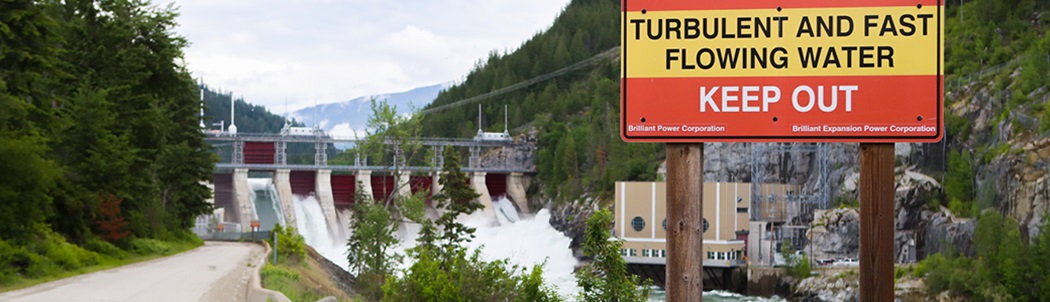
Upper Bonnington dam on the Kootenay River with spillways open.
More tips to keep you safe
Now that you’re familiar with three of the biggest myths about dams, we’ve got some tips to help keep you and your loved ones safe.
1. Keep watch.
Supervise children at all times and leash pets.
2. Keep away.
Maintain a safe distance from waterways that could have unstable footing or slippery banks.
3. Stay outside.
Always remain outside of safety booms, markers and buoys both above and below a dam.
4. Be aware.
Water levels can rise or fall quickly and without warning throughout the year since we use the flow of water to generate electricity.
5. Know your boating safety.
Don’t stand or tie/anchor your boat below a dam since rapid and unexpected changes in water flows and levels can create significant hazards.
6. Think twice about ice.
In winter, changing water levels and currents around dams can cause gaps to form under the frozen surface of reservoirs and rivers. So, avoid activities like snowmobiling, skating, cross-country skiing, ice fishing and walking on ice.
We want you to enjoy our waterways. Afterall, it’s part of what makes our province such an amazing place to live, work and play. Just enjoy them safely.
Related stories