Exploring the energy mix that powers B.C.
August 22, 2018
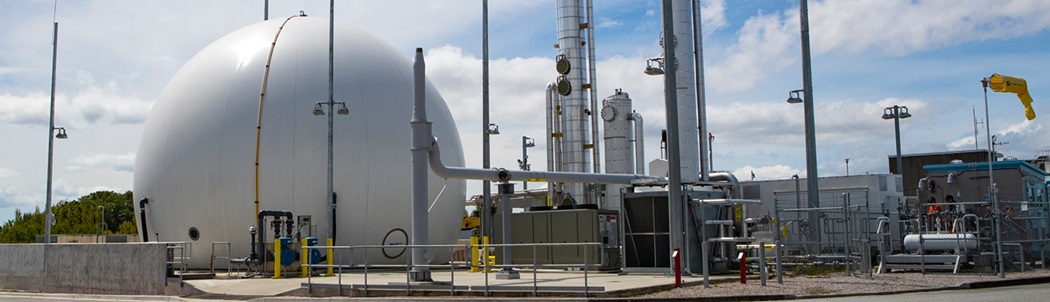
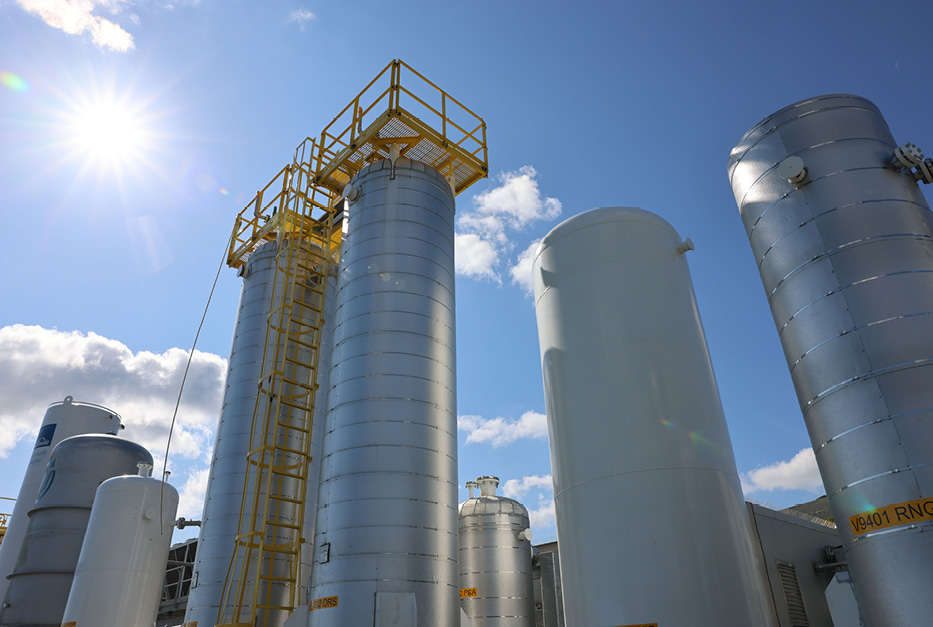
The Lulu Island Renewable Natural Gas Facility. We continue to acquire natural gas designated as Renewable Natural Gas1 (RNG)―an important piece of the province’s energy puzzle.
Updated on: November 17, 2026
British Columbia’s energy systems are about more than hydroelectric dams. While hydroelectricity provides a large share of the province’s electricity, it supplies less than one-fifth of B.C.’s total energy needs. Natural gas and other fuels (including gasoline, diesel and other lower carbon gas2 sources) together provide more of the energy people use every day to heat homes, run businesses and power transportation.3
FortisBC provides both gas and electricity and is exploring additional lower carbon electricity sources, including wind generation through its call for power process. We believe that increasing the availability of lower carbon energy will help meet growing demand and support B.C.’s climate action goals.
Energy is part of everyday life. It lights our homes, heats our water and fuels our vehicles. But where does that energy come from?
At a glance
- B.C.’s energy system depends on several energy sources, not just hydroelectricity.
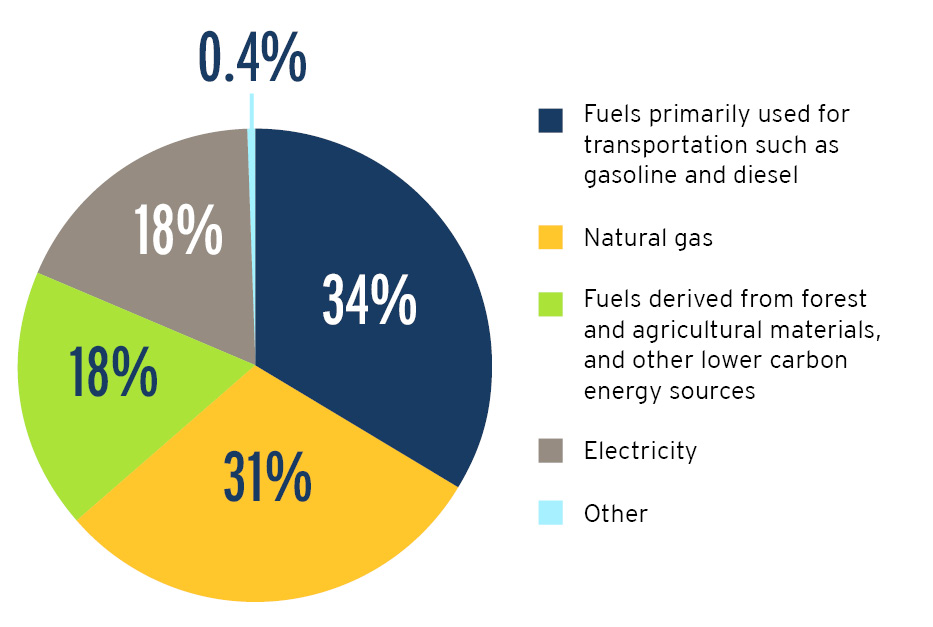
- Natural gas (31 per cent) and transportation fuels including gasoline and diesel (34 per cent) provide most of the province’s energy. Fuels derived from forest and agricultural materials and other lower carbon sources (18 per cent) and electricity (18 per cent) also play important roles.4
- We are expanding EV charging, continue to acquire lower carbon energy, including natural gas designated as Renewable Natural Gas (RNG) supply and supporting lower carbon transportation fuels.
- Energy-efficiency programs, rebates and Indigenous partnerships are helping reduce energy use and emissions.
What energy sources power British Columbia?
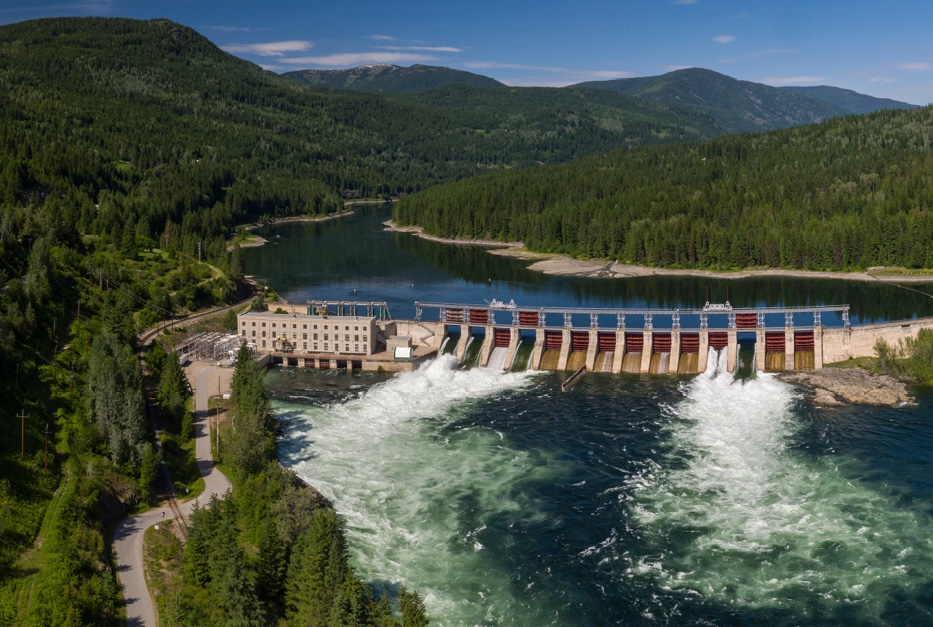
Hydroelectricity such as that produced by FortisBC’s Corra Linn Dam is among several kinds of energy sources, including natural gas and other fuels, that B.C. depends on.
B.C.’s energy comes from four main sources: fuels primarily used for transportation such as gasoline and diesel; natural gas; lower carbon fuels such as RNG and ethanol; and electricity. Here's how they compare:5
FortisBC’s place in the province’s energy landscape
FortisBC delivers energy to more than 1.3 million customers across the province. On the coldest days of the year, our gas system typically delivers about twice as much energy as B.C.’s electricity system.6
FortisBC is best known in B.C. as a gas provider but natural gas is only part of what we do.
We also provide electricity, including hydroelectricity through our own dams in B.C.’s Southern Interior, to about 199,300 customers. We own and operate four hydroelectric generating plants, in addition to operating five hydroelectric generating plants that are owned by others.
As well, we own and operate two liquefied natural gas (LNG) facilities, the Tilbury LNG Facility in Delta and the Mt. Hayes LNG Facility near Ladysmith on Vancouver Island. These facilities support LNG exports and help fuel transportation, including ferries and trucks. We work with fleet vehicle operators to replace diesel with both conventional natural gas and natural gas designated as RNG, and marine operators to replace petroleum-based fuels such as oil and diesel with LNG. In 2025 we nearly tripled the amount of LNG provided for marine and on-road transportation compared with the total in 2024.
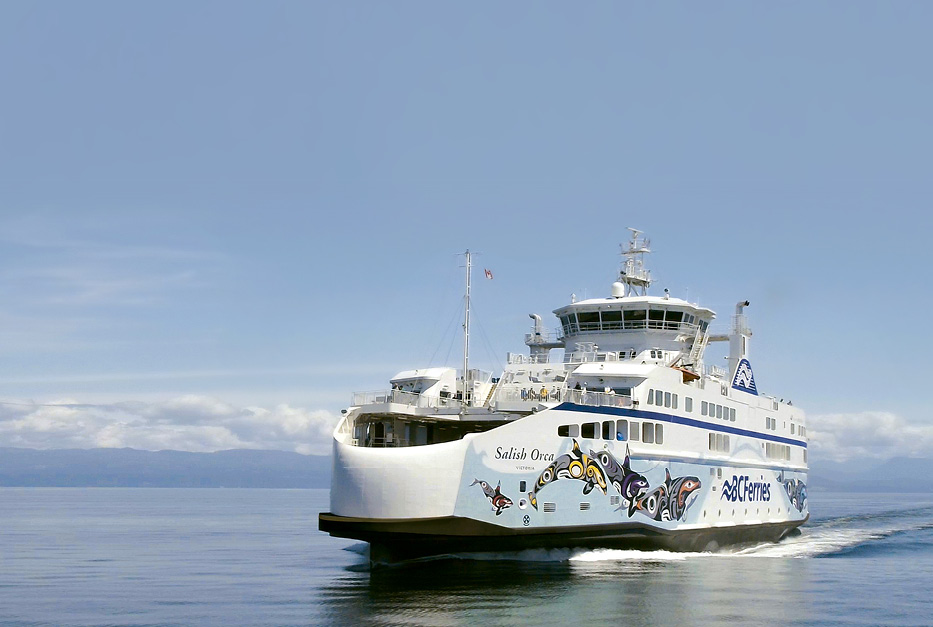
Liquefied natural gas supplied by FortisBC powers a growing number of marine vessels such as BC Ferries’ Salish Orca.
What will power B.C.’s energy future?
B.C.’s future energy needs will have to be met with a mix of energy solutions. As the province grows―B.C.’s population is expected to rise by almost 38 per cent by 20467―so does demand for reliable and affordable energy. No single energy source can meet every need, so a range of solutions will be important.
FortisBC, working with the Capital Regional District and Waga Energy Canada, began acquiring Renewable Natural Gas at a new facility located at the Hartland Landfill in 2025. The facility is the first of its kind on Vancouver Island.
FortisBC is investing in technologies that help reduce emissions while meeting customers’ energy needs. These include improved monitoring tools, gas absorption heat pumps, hydrogen research and RNG.
RNG is produced from biogas at dedicated RNG production facilities. Biogas is derived from decomposing organic waste at landfills or agricultural and other organic waste such as wastewater from treatment facilities. The biogas is captured, upgraded and processed to create RNG that is added to existing energy infrastructure. This means we’re unable to direct RNG to a specific customer. However, because RNG displaces conventional natural gas, the more RNG that is added to the gas system, the less conventional natural gas is used. In 2025, FortisBC continued to increase its RNG supply through projects in B.C. and across North America, including the Hartland Landfill in Victoria.
We are also exploring other lower carbon options. Through partnerships with Simon Fraser University and UBC, and by supporting B.C.’s first long-term demonstration of a hydrogen-powered Class 8 truck, we are learning how hydrogen could fit into the province’s future energy mix.
At the same time, we are expanding public EV charging, offering rebates and helping marine and fleet operators switch from diesel to lower carbon fuels.
Together, these efforts are helping build a more reliable and lower carbon energy future for British Columbia.
How we support sustainability

FortisBC supports sustainability and B.C.’s climate goals by helping customers use energy more efficiently. We offer rebates for products such as dual-fuel heating systems and EV chargers.
Through our Partners in Indigenous Energy Efficiency and Resilience program, we have supported Indigenous communities in improving the energy efficiency of existing homes. Four projects were completed in 2025, resulting in over $400,000 in energy-efficiency incentives.
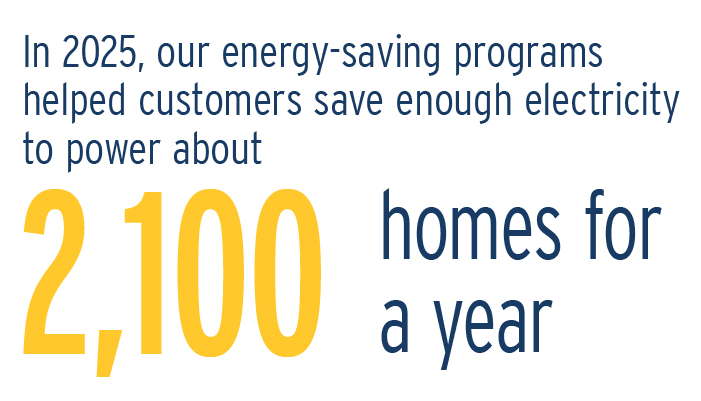
In 2025, our energy-saving programs helped customers save enough electricity to power about 2,100 homes for a year. They also reduced gas use by the equivalent of the annual energy needs of about 15,500 homes.8
We continued to expand access to lower carbon energy by acquiring 4.2 petajoules of RNG—enough to supply more than 48,000 homes each year. We also provided more LNG to transportation customers than in the previous year, including support for Canada’s first ship-to-ship LNG transfer.
The amount of LNG provided in 2025 was nearly three times higher than in 2024, largely because of LNG bunkering activity in the Port of Vancouver. This shows LNG’s potential as a marine fuel with a lower carbon intensity than diesel.9
Our affiliate, Fortis Alternative Energy Services, also operates renewable thermal energy systems to help heat new buildings.
1Renewable Natural Gas (also called “RNG”) is produced from biogas at dedicated RNG production facilities. Biogas is derived from decomposing organic waste at landfills or agricultural and other organic waste such as wastewater from treatment facilities. The biogas is captured, upgraded and processed to create RNG that is added to existing energy infrastructure. This means we’re unable to direct RNG to a specific customer. However, because RNG displaces conventional natural gas, the more RNG that is added to the gas system, the less conventional natural gas is used.
2FortisBC uses the term lower carbon gas to refer collectively to the lower carbon gases or fuels that the utility can produce, use and/or acquire under the Greenhouse Gas Reduction (Clean Energy) Regulation (“Regulation”). The Regulation identifies different sources of gases that are prescribed based on their feedstock and production processes. FortisBC’s lower carbon gas portfolio includes Renewable Natural Gas (also called “RNG”). Other gases and fuels may be added to the portfolio over time. FortisBC’s lower carbon gas portfolio is lower carbon when compared to conventional natural gas.
3Canada’s Energy Regulator: British Columbia Energy Profile.
4Canada’s Energy Regulator: British Columbia Energy Profile.
5Canada’s Energy Regulator: British Columbia Energy Profile.
6FortisBC, 2024 Sustainability Report.
7BCStats, B.C. Population Estimates: Regional District level and Outlook for 2046, p. 2.
8Natural Resources Canada Greenhouse Equivalencies Calculator, based on savings of 50 gigawatt hours of electricity and 1,360,623 gigajoules of gas, as reported in FortisBC’s 2025 Sustainability Report.
9Source: The B.C. government uses a lifecycle analysis model called GHGenius to determine carbon intensity of various fuel pathways. In this model, the default baseline carbon intensity for diesel is 94.38 grams of carbon dioxide equivalent per megajoule of energy (gCO2e/MJ). FortisBC does not have fuel codes for its CNG as the diversity and dynamics of its supply and distribution pathways are incredibly complex to analyse reliably so FortisBC uses GHGenius’s default recorded carbon intensity of 63.91 gCO2e/MJ. FortisBC does have fuel codes for LNG that specify the carbon intensity at 65.94 gCO2e/MJ. This value can be used as-is for road transportation. When considering the potential for methane slip in LNG for marine applications, using the worst-case additional carbon intensity included in the B.C. government’s LCFS calculator of 27.3 gCO2e/MJ, the overall carbon intensity of LNG for marine applications is 93.24 gCO2e/MJ. Using this rationale, both CNG and LNG have a lower carbon intensity than the baseline value for diesel.
Related stories